Commercial Stainless Steel Ice Maker Guide and Installation
January 10, 2026 | by li, moniker
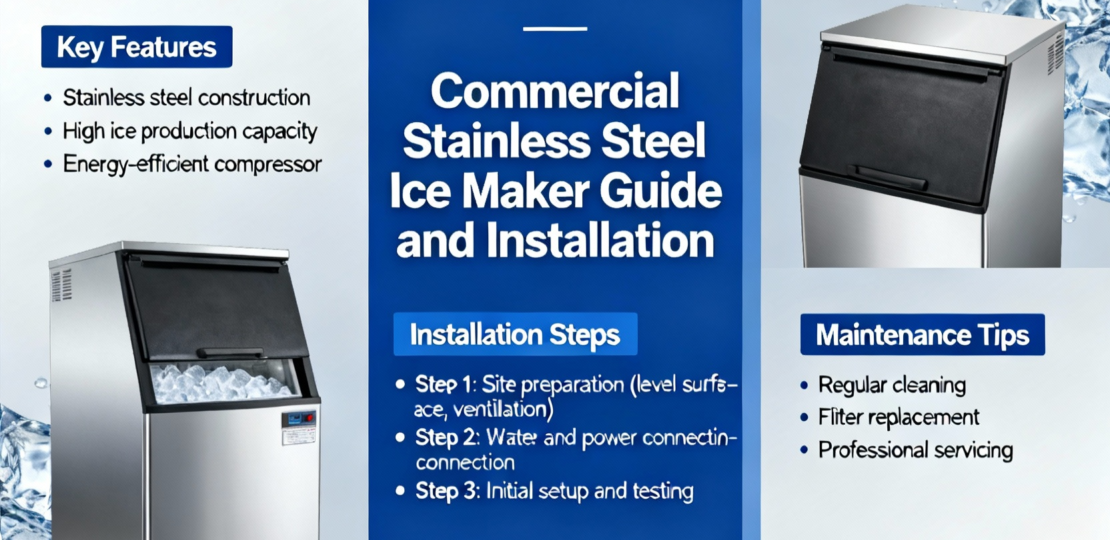
For any bustling food service operation, a reliable ice maker is the unsung hero of the kitchen. This guide delves into the essential features and critical installation requirements of a heavy-duty commercial ice maker, focusing on a model built with durable stainless steel and designed for versatile environments. Understanding these details is key to ensuring optimal performance, longevity, and safety in your restaurant, bar, or hotel.
Engineering for Commercial Endurance
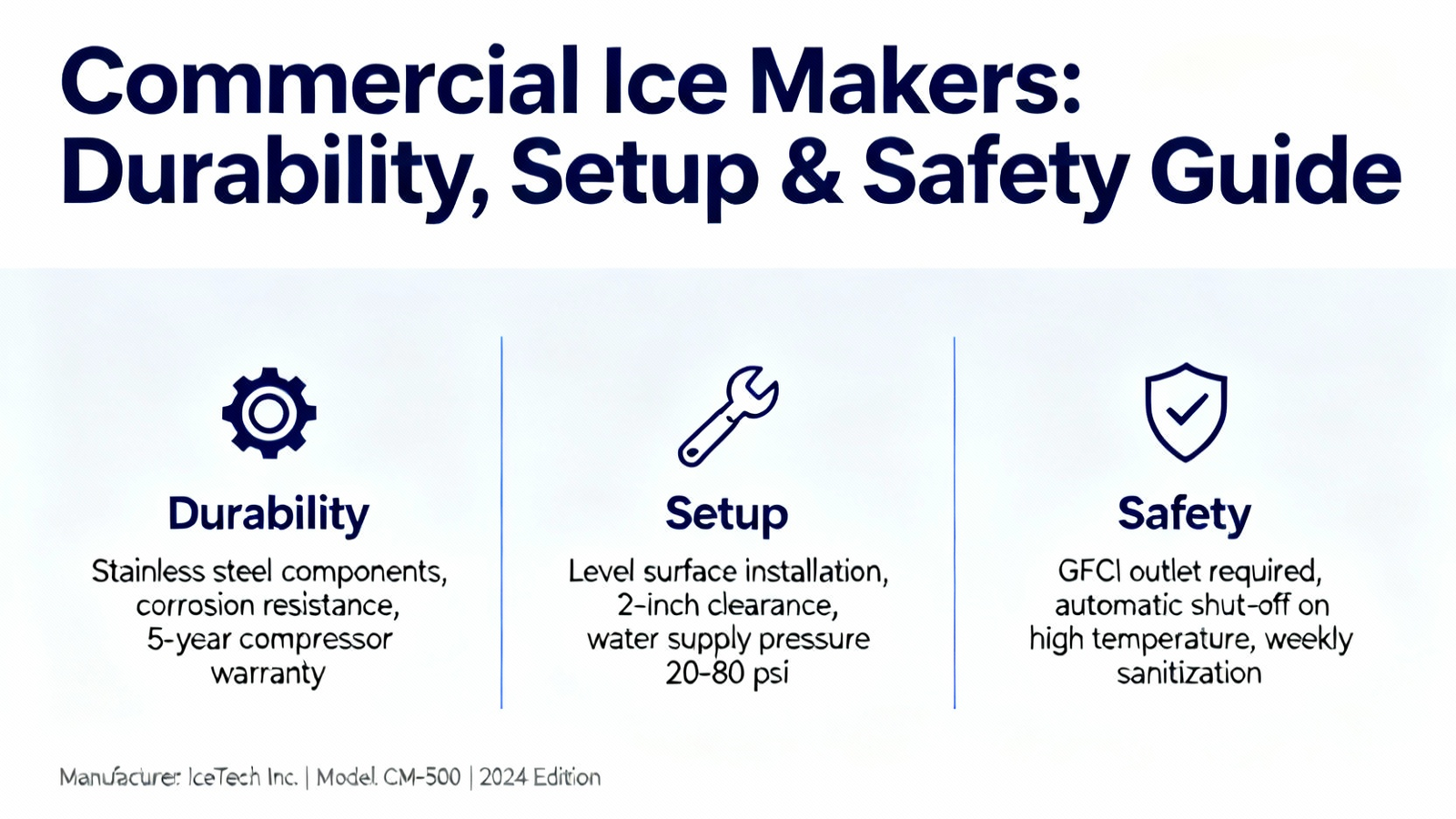
At the core of this unit is its durable stainless steel construction, a material chosen for its resistance to corrosion, ease of cleaning, and ability to withstand the constant demands of a commercial setting. The use of environmentally friendly R290 (propane) refrigerant is a forward-thinking choice. According to Wikipedia, R290 has a “negligible ozone depletion potential and very low global warming potential” compared to traditional hydrofluorocarbons (HFCs), making it a more sustainable option as industries move away from high-impact refrigerants. Furthermore, its compatibility with climate types SN, N, and ST ensures reliable ice production across a wide range of ambient temperatures, from subtropical to temperate environments.
Power, Placement, and Prerequisites
Designed for standard 110V 60Hz operation with a 780W draw, this ice maker integrates into most North American commercial kitchens without requiring special electrical work. However, proper placement is non-negotiable for performance and safety. The unit requires a dedicated drinking water supply with precise pressure (14.5-58 PSI) and must be positioned with at least 6 inches of clearance on all sides for adequate airflow, as stipulated in the manual. This prevents the compressor from overheating, a common cause of premature failure. A critical, often overlooked step is the 24-hour settling period after delivery. As discussed in appliance forums on Reddit, users like u/fridgetech22 emphasize that “letting a refrigeration unit sit upright allows the oil in the compressor to settle back… if you don’t, you risk killing the compressor”. This directly applies to ensuring the R290 refrigerant and compressor oil are properly settled before initial startup.
Critical Safety and Operational Protocols
Adhering to safety guidelines protects both your investment and your premises. The instructions explicitly warn against using extension cords, which can overheat and pose a fire risk, and against placing the unit near flammable materials. The ice maker is equipped with a three-prong plug for proper grounding (Safety Protection Type I). Operationally, it must be connected to a gravity-fed drain line, as meltwater from the internal storage bin is continuously discharged. Using any liquid other than potable water to make ice can damage the machine and create health hazards. For operations seeking a robust solution with these specifications, the 23.23 in. 750 lbs./24h Capacity Commercial Stainless Steel Ice Maker exemplifies this category of equipment.
Maximizing Long-Term Performance and Output
To ensure the machine meets its advertised capacity, environmental factors must be managed. The manual notes that surrounding temperature influences ice-making time; higher ambient temperatures will reduce daily output and increase cycle times. Therefore, installing the unit away from direct sunlight, ovens, or radiators is crucial. Regular maintenance, including cleaning and sanitizing as per the manufacturer’s schedule, prevents scale buildup and bacterial growth, ensuring ice quality. The unit’s substantial net weight of ~145 lbs and dimensions (26.4” W x 23.2” D x 61.4” H) indicate a solid, high-capacity build designed for stationary, permanent installation in a high-traffic back-of-house location, much like the reliable performance expected from a commercial stainless steel ice maker built for daily demand.
In conclusion, integrating a heavy-duty commercial ice maker into your operation is a significant decision that extends beyond simple plug-and-play. This analysis underscores that its durable stainless steel construction and modern R290 refrigerant system form a robust foundation for sustainability and durability. However, the true key to unlocking its potential lies in meticulous adherence to installation and safety protocols: ensuring proper water pressure and supply, allowing for the critical compressor settling time, providing adequate ventilation space, and implementing correct drainage. Neglecting these steps, as highlighted by expert community advice from sources like Reddit, can lead to reduced efficiency, mechanical failure, or safety hazards. By understanding that factors like ambient temperature directly impact production and that strict safety measures are non-negotiable, operators can protect their investment. Ultimately, a model like the 750 lbs./24h Capacity Commercial Stainless Steel Ice Maker, when installed and maintained correctly, transitions from being merely a piece of equipment to becoming a dependable cornerstone of daily service, ensuring a consistent supply of ice that keeps service flowing smoothly and customers satisfied.
RELATED POSTS
View all