For any bustling food service operation, a reliable ice maker is the unsung hero of the kitchen. This guide delves into the critical specifications, installation requirements, and safety protocols for a heavy-duty commercial ice maker, ensuring you maximize its performance and lifespan. Understanding these details is key to seamless integration into your restaurant, bar, or hotel.
Core Specifications and Commercial-Grade Design
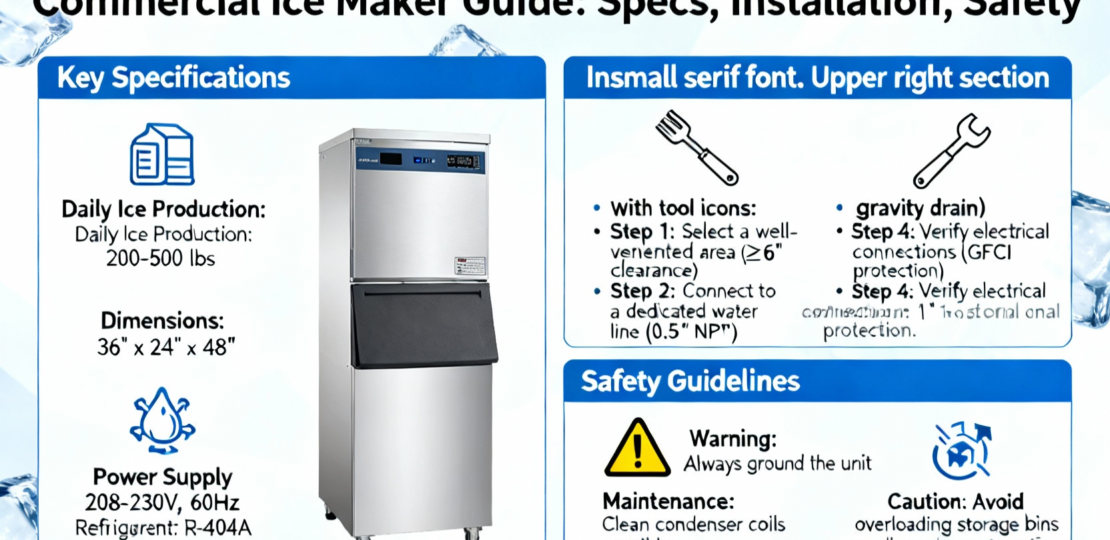
This ice maker is engineered for demanding environments. Its durable stainless steel construction resists corrosion and is easy to clean, a standard in commercial kitchens for hygiene and longevity. Operating on standard 110V 60Hz power with a 780W draw, it’s designed for accessibility in North American establishments. A significant feature is its use of R290 (propane) refrigerant, recognized for its low environmental impact. As noted in discussions on sustainable technology, R290 has a Global Warming Potential (GWP) of 3, drastically lower than traditional refrigerants, making it a more eco-conscious choice (Wikipedia, R-290). With compatibility for varied climate types (SN, N, ST) and a substantial net weight of ~145 lbs, it’s built for stable, reliable output in diverse back-of-house conditions.
Critical Installation and Site Preparation
Proper installation is non-negotiable for performance and safety. The unit requires a direct connection to a drinking water supply with a specific pressure range of 14.5-58 PSI. Outside this range, a pressure changeover valve is mandatory to prevent damage. Equally important is ventilation: a minimum 6-inch clearance on all sides is required for airflow, preventing overheating and ensuring efficient operation. The unit must be placed on a level surface capable of supporting its weight and have its gravity drain pipe properly installed, with the outlet lower than the machine’s port, before first use. As seasoned users on hospitality forums often advise, neglecting these steps is a common cause of early failure or inefficient ice production (Reddit, /r/KitchenConfidential, Dec 2023).
Essential Safety and Initial Startup Protocol
Adhering to safety guidelines protects your investment and your premises. The ice maker comes with a three-prong plug and a 70-inch cord; using an extension cord is strongly discouraged as it can overheat and create a fire hazard. The unit must be kept away from flammable materials, direct sunlight, and heat sources like stoves. A crucial, often overlooked step is the 24-hour settling period after delivery. The unit must remain upright for a full day before being plugged in, allowing the refrigerant and oils to settle after transit—a standard procedure for compressor-based appliances to avoid severe damage. For a model that embodies these robust features, consider the 23.23 in. 750 lbs./24h Capacity Commercial Stainless Steel Ice Maker.
Optimization and Long-Term Operational Notes
To ensure consistent ice production, operators must understand a few key variables. Only use potable water in the unit; other liquids can damage the system and contaminate ice. Be aware that the ambient environmental temperature directly influences ice-making cycle times; production will be slower in a hot kitchen. The machine is designed for indoor use only, as outdoor conditions can lead to component failure and void warranties. Regular maintenance, including cleaning the air filter and sanitizing the ice-making compartment, is essential. Resources like Wikipedia’s entry on ice machines detail common maintenance cycles to prevent scale and biofilm buildup, which are critical for food safety. Investing in a reliable unit like the commercial stainless steel ice maker is the first step, but proper care defines its service life.
In summary, integrating a heavy-duty commercial ice maker into your operation requires careful attention to its technical specifications, installation environment, and safety protocols. From its stainless steel build and eco-friendly R290 refrigerant to the mandatory clearances and water pressure requirements, each detail contributes to reliable, efficient ice production. The initial 24-hour settling period and proper drainage setup are critical to avoid immediate damage, while long-term adherence to indoor use, regular maintenance, and understanding the impact of ambient temperature will ensure the machine meets its lifespan potential. By treating this essential equipment with the same rigor as any other major kitchen appliance—following manufacturer guidelines and industry best practices—you secure a consistent supply of ice, the backbone of beverage service and food safety. Ultimately, the performance of your stainless steel ice maker hinges on this holistic approach to installation and operation.
RELATED POSTS
View all