The Ultimate Guide to Heavy-Duty Commercial Ice Makers
For restaurants, bars, and hotels, a reliable ice supply is non-negotiable. This guide delves into the robust features, essential installation requirements, and critical safety protocols for operating a heavy-duty, stainless steel commercial ice maker. Ensuring optimal performance starts with understanding the machine’s specifications and the correct setup environment.
Engineering for Endurance and Efficiency
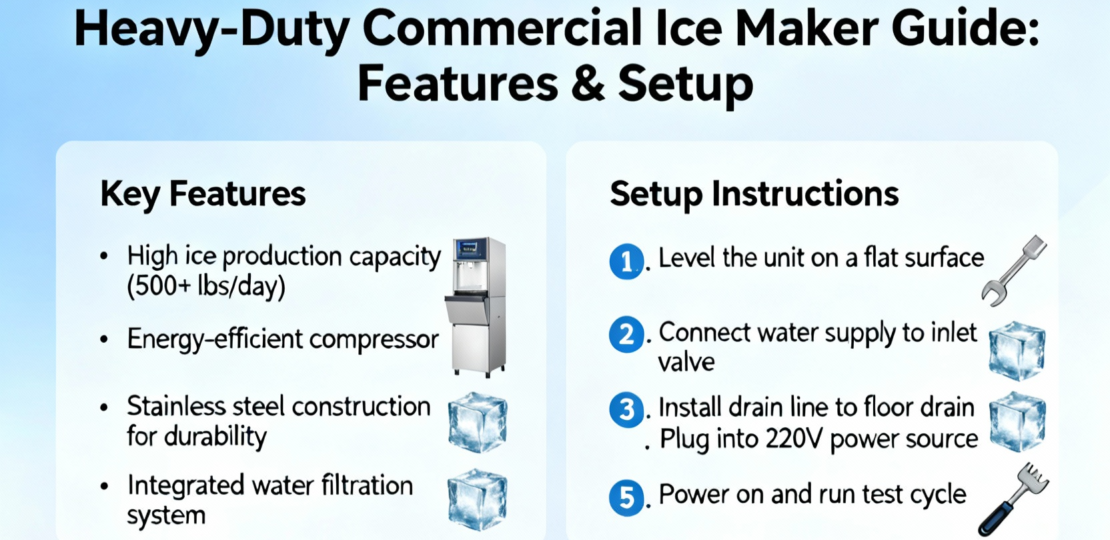
At the core of a professional ice-making operation is equipment built to last. This class of ice maker features a durable stainless steel construction, which, as noted in discussions on commercial kitchen durability, is preferred for its resistance to corrosion and ease of cleaning. The use of environmentally friendly R290 (propane) refrigerant is a significant modern advancement. According to Wikipedia, R290 has a “negligible ozone depletion potential and very low global warming potential” compared to traditional HFCs, making it a sustainable choice. With a 780W power draw on standard 110V/60Hz power and compatibility with multiple climate types (SN, N, ST), this machine is engineered for efficient, reliable performance in varied operational settings, from a cool cellar to a busy kitchen line.
Critical Installation and Placement Guidelines
Proper installation is paramount for safety and performance. The unit requires a direct connection to a drinking water supply with precise pressure (14.5-58 psi), as hard or mineral-laden water can affect ice quality and machine longevity. Ventilation is crucial; maintaining at least 6 inches of clearance on all sides allows heat from the condenser to dissipate effectively, a point often emphasized by technicians on forums like r/Appliances. The unit must be placed on a level surface, and the gravity drain pipe must be installed with a downward slope, as meltwater discharge is not pumped. Perhaps the most critical step is allowing the unit to settle upright for 24 hours after delivery before its first use, ensuring the compressor oil and refrigerant settle properly to prevent immediate damage.
Operational Safety and Best Practices
Adhering to safety protocols protects both your investment and your premises. The ice maker comes with a three-prong plug for grounding; using an extension cord is strongly discouraged due to the risk of overheating and fire, a hazard frequently cited in electrical safety discussions. The unit must be kept away from heat sources and direct sunlight, as ambient temperature directly influences ice production cycles. It is designed for indoor use only; outdoor conditions expose it to contaminants and temperature extremes it cannot handle. Furthermore, only clean, potable water should be used. As a Reddit user in r/KitchenConfidential advised, “Using anything but water in your ice machine is a surefire way to ruin it and create a health hazard”. Regular cleaning and maintenance, as per the manual, complete these essential best practices.
Conclusion: Investing in Reliable Ice Production
Selecting and operating a heavy-duty commercial ice maker is a significant decision that impacts daily operations. This guide has outlined the key considerations: from the robust stainless steel construction and eco-friendly R290 refrigerant that define its core engineering, to the non-negotiable installation requirements like proper water pressure, ventilation, and drainage. We’ve emphasized critical safety measures, including correct electrical setup and indoor placement, which are essential for preventing hazards and ensuring equipment longevity. By understanding these factors—the machine’s capabilities, its precise setup needs, and the ongoing safety protocols—business owners can ensure their commercial ice maker delivers a consistent, reliable supply of ice. This not only supports seamless service but also protects the investment, making it a cornerstone of an efficient and professional foodservice or hospitality operation. Proper care and adherence to guidelines transform this powerful appliance into a dependable asset for years to come.
RELATED POSTS
View all