

Hybrid Mattress Layers: Memory Foam, Pocket Springs, Support
January 31, 2026 | by li, moniker
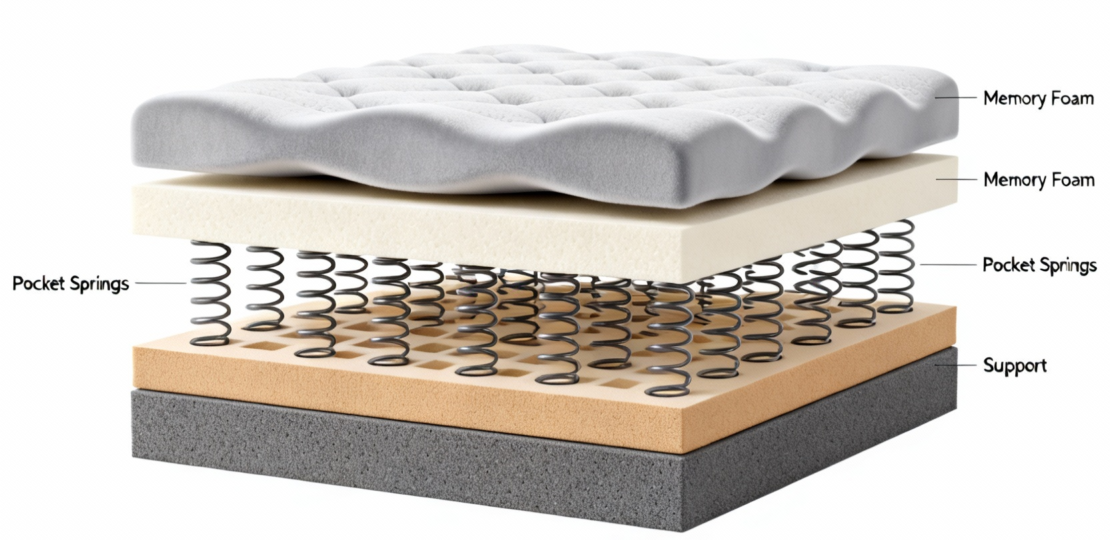
Choosing the right mattress is a critical decision for sleep quality and health. This article delves into the engineering behind a modern hybrid mattress, examining how its specific layers of knit fabric, memory foam, and pocket springs work in unison to provide pressure relief, support, and durability. We’ll explore the science of sleep surfaces to help you understand what makes a mattress truly restorative.
The Foundation: Advanced Pocket Spring Support
At the core of this mattress’s support system are 18cm individual pocket springs. Unlike traditional interconnected spring units, each pocketed coil moves independently. This design is crucial for minimizing motion transfer and providing zoned support, meaning heavier body parts like hips and shoulders can compress their springs without affecting the surrounding area. The use of 1.8mm diameter wire indicates a robust gauge, contributing to the mattress’s longevity and preventing sagging. This targeted support aligns with the principle of maintaining spinal alignment, a factor widely recognized as essential for preventing back pain. The concept of pocketed coils has been a significant evolution in mattress technology, moving away from the less responsive Bonnell coils common in older designs.
The Comfort Layer: Adaptive Memory Foam and Breathable Knit
Above the springs lies the comfort layer, a 4cm composite designed for pressure relief and temperature regulation. The top 270gsm knit fabric is a breathable material that promotes airflow. Beneath it, the inclusion of gel-infused memory foam is a direct response to a common complaint about traditional memory foam: heat retention. As noted in a Reddit discussion on mattress materials, a user pointed out that “gel memory foam is supposed to help with the heat issue” (u/SleepyHeadReviews, March 2022). This gel infusion aims to draw heat away from the body. The foam’s viscoelastic properties allow it to contour precisely to the body’s shape, distributing weight evenly and reducing pressure points, which is a key benefit cited for improving sleep quality.
Safety, Durability, and Modern Construction
Beyond comfort, a mattress must be safe and built to last. The described model incorporates fire-retardant materials within its borders, a non-negotiable safety standard. The surrounding border foam reinforces the edges, combating the common issue of edge collapse and increasing the usable sleep surface. The durable polyester bottom cover ensures stability on the bed base. This focus on structural resilience in the construction phase is what transforms a collection of materials into a cohesive, long-lasting product. Durability is a frequent topic among consumers; for instance, Wikipedia’s entry on mattresses highlights that the lifespan of a quality mattress is typically 7-10 years, emphasizing the importance of construction quality on longevity.
Conclusion: The Synergy of Hybrid Design
In summary, this 10″ hybrid mattress represents a calculated fusion of materials designed to address multiple sleep needs. The pocket spring core provides the essential, durable support and motion isolation that forms the foundation for proper spinal alignment. The layered comfort system, featuring breathable knit and gel memory foam, directly tackles pressure relief and temperature regulation—two factors consistently highlighted in sleep science. The integration of safety features and reinforced borders speaks to a thoughtful construction that prioritizes long-term value. Ultimately, the true innovation lies not in any single component, but in their synergy. This hybrid approach attempts to balance the contouring “hug” of foam with the responsive support of springs, aiming to create a versatile sleep surface that caters to a wide range of sleepers seeking both softness and structural integrity. When evaluating such a mattress, understanding this interplay between layers is key to making an informed decision for your sleep health.
RELATED POSTS
View all


The Timeless Elegance of the Black Dress for Women: Versatile and Stylish
July 14, 2025 | by li, moniker


12-Inch Mattress: Engineered Layers for Cooling Support
February 7, 2026 | by li, moniker