Understanding how cold a wine fridge gets is crucial for any wine enthusiast. This article delves into the typical temperature ranges of these specialized appliances and explains why precise control is the key to perfectly preserving your collection’s flavor and aroma.
The Standard Temperature Range of a Wine Fridge
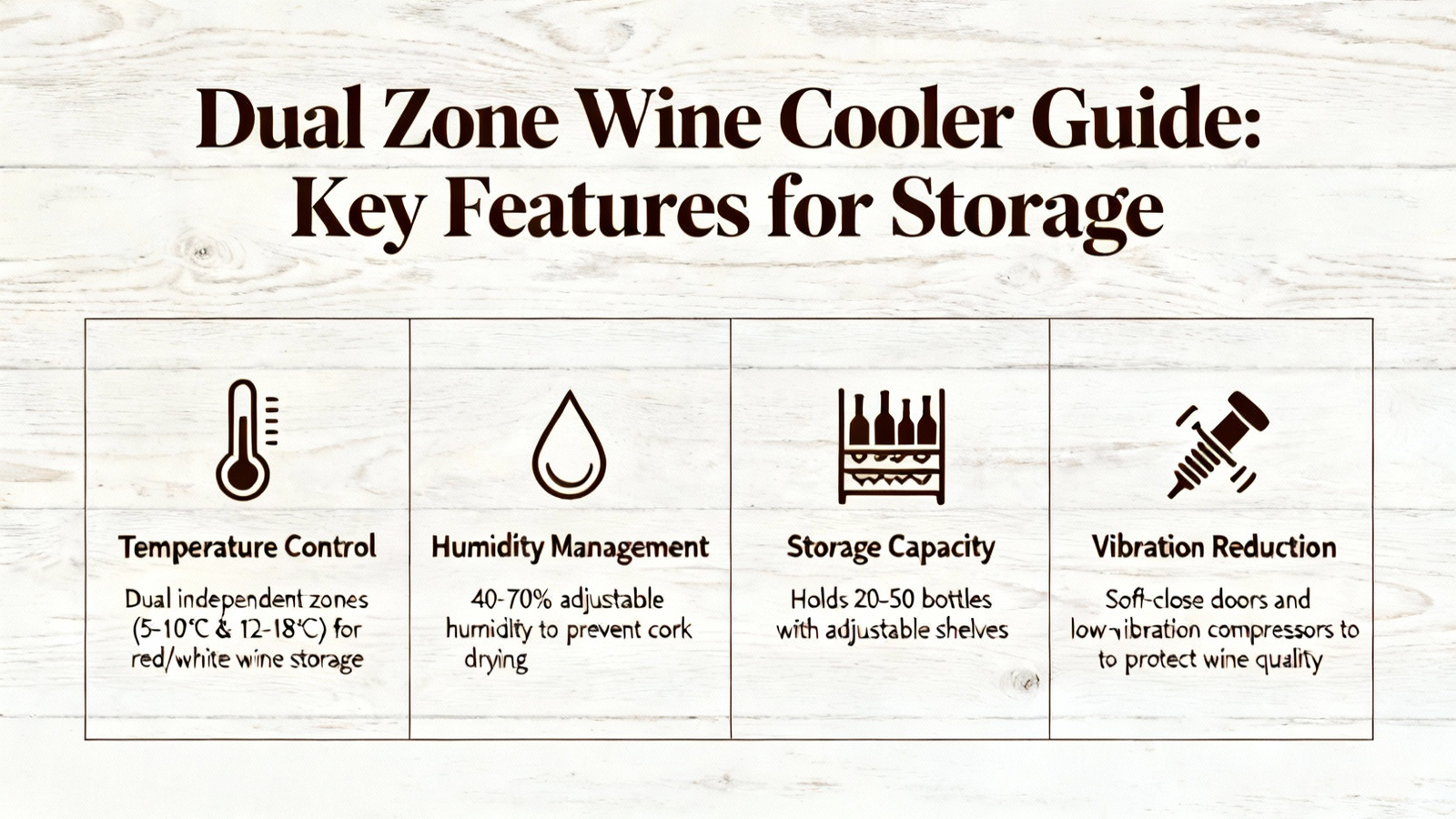
Unlike a standard kitchen refrigerator, which is designed to keep food near freezing, a wine fridge operates at a much higher and more stable temperature. The vast majority of wine coolers on the market offer a temperature range between 40°F and 65°F (4°C – 18°C). This spectrum is carefully designed to accommodate the diverse storage needs of different wine varieties, from crisp white wines that prefer a colder environment to full-bodied reds that are best kept slightly cooler than room temperature.
The importance of this specific range is backed by decades of oenological research. For instance, a pivotal 1976 study by the University of California, Davis, Department of Viticulture and Enology, confirmed that chemical reactions in wine accelerate with heat, leading to premature aging. Storing wine above 65°F (18°C) drastically increases the risk of spoilage, causing it to “cook” and lose its intended character. Conversely, storing wine below 40°F (4°C) can suppress its development and potentially cause corks to push out if the wine freezes and expands.
Finding the Perfect Setting for Your Wine
Knowing the fridge’s overall range is just the first step; the real art lies in dialing in the perfect temperature for each bottle. This is where understanding the optimal wine cooler temperature setting for every variety of wine becomes essential. A one-size-fits-all approach does not work. As a general rule:
- Sparkling & Light White Wines: Best served very chilled, these should be stored at the colder end of the spectrum, between 40°F – 50°F (4°C – 10°C).
- Full-Bodied White & Light Red Wines: These varieties thrive in a middle ground, typically between 50°F – 55°F (10°C – 13°C).
- Bold Red Wines: Meant to be served at “cellar temperature,” these are ideally stored warmer, between 55°F – 65°F (13°C – 18°C).
For collectors with a dual-zone wine fridge, this allows for the ultimate flexibility, permitting you to maintain two different climates within a single unit. Ultimately, the question of how cold does a wine fridge get is less important than how precisely it can maintain your chosen setting. Consistency is paramount, as fluctuations are one of the biggest enemies of proper wine storage.
In summary, a wine fridge’s capability to maintain a steady temperature between 40°F and 65°F is what separates it from a regular refrigerator. The exact setting is not arbitrary; it is a science-driven choice that depends entirely on the wine varietal. By mastering your unit’s controls and setting it according to the specific bottles inside, you ensure each one is preserved in an ideal environment, ready to be enjoyed at its absolute best.
RELATED POSTS
View all