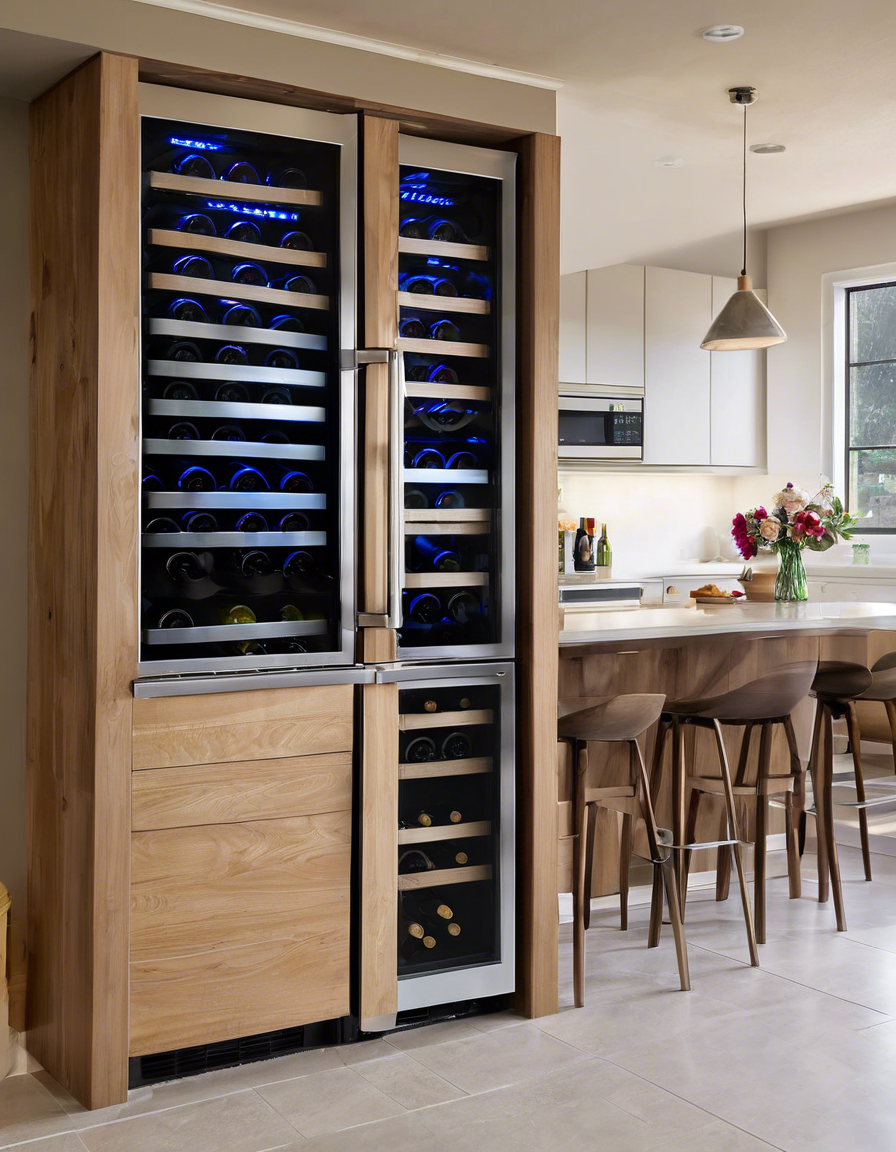
For the serious collector or entertainer, a large wine fridge cabinet is more than an appliance; it’s the cornerstone of a well-curated wine experience. This article will guide you through the essential features and considerations, from capacity and cooling technology to design integration, ensuring your investment perfectly preserves and showcases your valuable collection for years to come.
Defining Your Needs: Capacity and Cooling Zones
Before selecting a unit, understanding your collection’s composition is paramount. A large wine fridge cabinet typically holds 100 bottles or more, but look beyond the number. Consider the bottle types; wider Bordeaux-style bottles take up less space than taller, bulkier Champagne bottles. A 150-bottle unit might effectively hold only 120 if your collection is Champagne-heavy.
Equally critical is the internal climate. Dual-zone or even triple-zone cooling is a non-negotiable feature for diverse collections. As established by the Office of Champagne, the ideal serving temperature for Champagne is 46-48°F (8-9°C), while a full-bodied red like Cabernet Sauvignon is best at 60-65°F (15-18°C). A single-zone unit forces a compromise, but a multi-zone wine cooler allows you to create these distinct environments simultaneously, preserving the integrity and intended taste profile of each wine style.
Advanced Features for Optimal Preservation and Style
Once capacity and zoning are decided, the focus shifts to the technology that ensures long-term preservation and seamless integration into your home. The two primary cooling systems are Thermoelectric and Compressor-based. Thermoelectric units are quieter and vibration-free, ideal for short-term storage in living areas. For a large-capacity unit intended for long-term aging, a compressor-based system is superior, as it handles heat removal more efficiently, especially in warmer ambient environments.
Look for models with low-emissivity (Low-E) glass doors and UV protection. A 2019 study published in the Journal of Agricultural and Food Chemistry confirmed that UV light is a primary catalyst for the chemical reactions that spoil wine, causing “light strike” or “goût de lumière.” Furthermore, precise digital temperature controls and a robust insulation system are essential for maintaining a constant temperature, preventing the thermal fluctuations that can prematurely age your wine. Explore the range of premium wine preservation cabinets available to find a model that combines this advanced technology with a design that complements your kitchen or cellar aesthetic.
In summary, choosing the right large wine fridge cabinet hinges on a careful evaluation of your collection’s size and variety, leading you to a unit with appropriate capacity and multi-zone cooling. This must be paired with advanced preservation features like UV-protected glass and stable compressor cooling. By prioritizing these elements, your final selection will not only be a stylish statement piece but a functional asset that expertly safeguards your investment in wine, ensuring every bottle is served at its absolute best. For a curated selection of units that meet these criteria, consider browsing a dedicated wine cooler collection.
RELATED POSTS
View all